Could a simple bathroom update stay below $10,000, or could a larger renovation reach $30,000 or more?
The answer depends on the size of the room, project scope, plumbing changes, materials, fixtures, labor, and existing conditions. If you are planning a project, understanding these variables is the best placeto start when estimating how much a bathroom remodel may cost in Virginia Beach.
In 2026, smaller bathroom remodeling projects in Virginia Beach may fall roughly between $4,500 and $8,500, while more complete renovations often move into the $15,000 to $30,000+ range. Projects involving major layout changes, extensive plumbing, custom materials, premium finishes, or repairs discovered after demolition can cost more.
Medrano & Sons Construction is a family-owned construction company serving Virginia Beach and surrounding communities since 2017. This guide explains the major factors that influence bathroom remodeling costs so homeowners can approach their project with a more realistic budget and understand why two bathrooms of similar size can have very different final prices.
Key Takeaways
- Bathroom remodel costs vary significantly according to scope, room size, and existing conditions.
- Keeping the existing plumbing layout can help control labor and construction costs.
- Tile, fixtures, cabinetry, shower systems, and finish selections can substantially change the budget.
- Hidden moisture, plumbing, subfloor, or wall problems can increase costs after demolition begins.
- A detailed project estimate is more useful than relying on price per square foot alone.
How Much Does a Bathroom Remodel Cost in Virginia Beach?
There is no single price for a bathroom remodel in Virginia Beach. A cosmetic refresh and a full renovation with relocated plumbing are fundamentally different projects, even when both rooms have similar dimensions.
- As a broad planning range, smaller projects may start around $3,000 to $7,000.
- More complete bathroom remodels frequently fall between $7,000 and $20,000.
- Larger or more customized renovations can reach $20,000 to $30,000 or more.
- Projects with significant structural changes, premium materials, custom showers, or extensive hidden repairs can move beyond those ranges.
The most useful way to think about bathroom remodel pricing is by scope. Start by deciding whether you want to improve the appearance of an otherwise functional bathroom, replace most fixtures and finishes, or completely rebuild the space. That decision has a much greater effect on price than square footage alone.
Typical Bathroom Remodel Cost Ranges
- Basic refresh: paint, fixtures, flooring, hardware, mirrors, or vanity updates
- Standard remodel: new tile, vanity, lighting, fixtures, tub or shower improvements
- Major renovation: layout changes, custom features, extensive plumbing, or premium finishes
These figures are useful for early planning, but the final cost should be based on the actual condition and scope of the bathroom. A contractor should evaluate the room, discuss what you want to change, and identify which portions of the existing bathroom can remain before developing a detailed estimate.
Bathroom Remodeling Cost Per Square Foot
Price per square foot can provide a rough comparison, but it should not be treated as a fixed formula. Bathroom projects can range widely because a relatively small room may contain plumbing, electrical, waterproofing, cabinetry, tile, ventilation, lighting, and several fixtures.
As a general planning range, bathroom remodeling may fall somewhere between approximately $100 and $250+ per square foot, depending on the level of work and materials selected. However, a detailed project estimate is much more reliable than square footage alone.
For example, a compact bathroom that includes a custom tiled shower, plumbing relocation, new electrical work, premium fixtures, and extensive waterproofing can cost more per square foot than a larger bathroom that maintains its existing layout and uses standard materials.
Bathroom Remodel Costs by Size
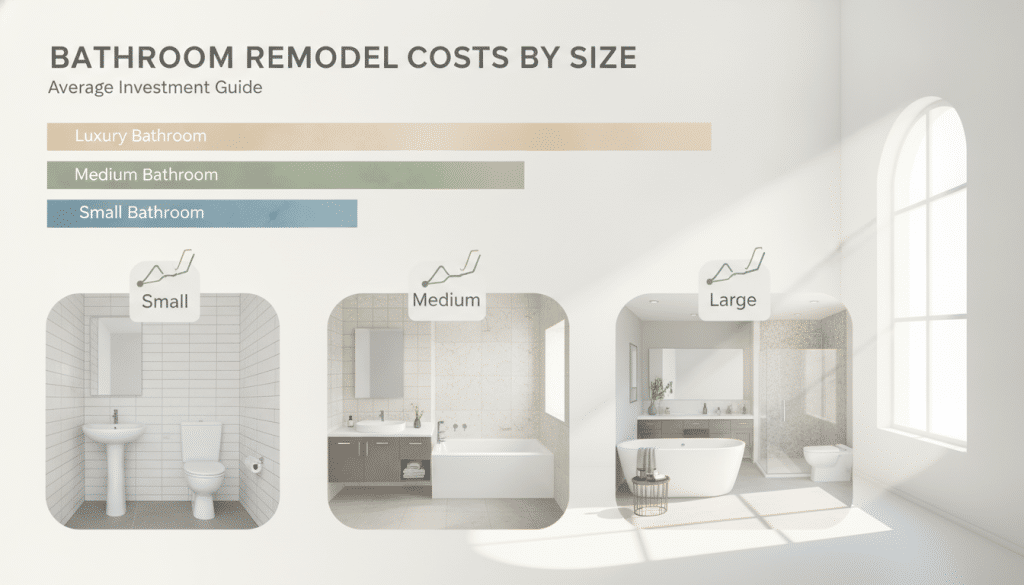
Room size affects material quantities and labor, but it is only one part of the budget. A small bathroom with extensive tile work and relocated plumbing can cost more than a larger room that keeps its existing layout.
Small Bathrooms
Bathrooms of approximately 20–40 square feet may often fall in the $4,500 to $8,500 range when the project keeps major plumbing in place and focuses on practical fixture and finish updates.
Because the room is smaller, there may be less flooring and wall area to finish. However, a small bathroom can still require many of the same trades as a larger one. Plumbing, lighting, ventilation, tile installation, waterproofing, and fixture installation may all be necessary regardless of room size.
Medium Bathrooms
Bathrooms of roughly 40–75 square feet may commonly fall between $7,500 and $15,000. Larger vanities, additional tile, upgraded lighting, better fixtures, improved storage, and shower modifications can move the budget higher.
This size range gives homeowners more flexibility in material selections and layout. It also creates more opportunity to add storage or improve circulation, although relocating major fixtures can significantly increase the amount of work required.
Large Bathrooms
Larger bathrooms can move into the $15,000 to $30,000+ range, particularly when the project includes double vanities, walk-in showers, extensive tile, new storage, premium fixtures, or changes to the existing layout.
Primary suites can also involve more cabinetry, countertop area, lighting, glass, and plumbing fixtures. If walls are moved or new shower areas are created, additional framing, waterproofing, plumbing, and finish work may be required.
The most accurate approach is to consider size together with plumbing, materials, demolition, access, fixture count, and existing conditions.
Bathroom Remodel Costs by Bathroom Type
The way a bathroom is used can influence the budget just as much as its dimensions. A powder room has different requirements from a guest bath or a primary suite.
Powder Room and Half Bath Remodels
A simple powder room renovation may range from approximately $2,000 to $6,000. Because there is usually no bathtub or shower, these spaces may require less plumbing, tile, and waterproofing than a full bathroom.
A powder room can also be a good place to concentrate spending on a few high-impact features, such as a vanity, mirror, lighting, faucet, wall treatment, or flooring. Because the space is small, a limited number of carefully selected upgrades can significantly change its appearance.
Guest Bathroom Remodels
Guest bathrooms commonly fall around $6,000 to $14,000 depending on the room size, fixture quality, tile selections, and whether the existing layout remains unchanged.
These projects often include a vanity, toilet, tub or shower, flooring, lighting, paint, and accessories. Keeping the main plumbing locations in place generally makes the project easier to control from a budget and scheduling standpoint.
Primary Bathroom Remodels
Primary bathroom renovations can range from approximately $8,000 to $30,000 or more. Larger projects may include double vanities, larger showers, upgraded storage, premium finishes, additional lighting, or changes to the plumbing layout.
- Keep supply and drain locations in place when practical.
- Prioritize durable materials in wet areas.
- Spend more on features that improve daily function.
- Consider storage and lighting during the planning stage, not after construction begins.
How Project Scope Affects Bathroom Remodel Cost
Project scope is one of the biggest factors affecting price. The more parts of the bathroom that are removed, relocated, or rebuilt, the more labor, materials, and coordination the project may require.
Before requesting estimates, it helps to decide which existing components you genuinely want to change. A complete gut renovation may be appropriate for an outdated or poorly functioning bathroom, but it is not always necessary when the existing layout and underlying systems are in good condition.
Cosmetic Bathroom Refreshes
A cosmetic refresh may cost approximately $3,000 to $7,000. Typical improvements can include paint, hardware, mirrors, lighting, flooring, and selected fixture replacements without changing the basic layout.
This approach is most appropriate when the room is already functional and the main goal is updating appearance rather than correcting layout, plumbing, waterproofing, or structural issues.
Standard Bathroom Remodels
A more complete remodel may fall between $7,000 and $20,000. This scope can include new tile, vanity, lighting, plumbing fixtures, flooring, and tub or shower improvements while keeping most major plumbing in its existing location.
A standard remodel can dramatically change the room while avoiding the additional work associated with moving walls or relocating every fixture. For many homeowners, this balance provides the most noticeable improvement without turning the project into a complete reconstruction.
Full Bathroom Renovations
A full renovation may reach $20,000 to $30,000+, and highly customized projects can go higher. Major demolition, layout changes, plumbing relocation, electrical changes, waterproofing, and structural repairs can all increase the final cost.
When a project reaches this level, it should be treated as a coordinated construction project rather than simply a collection of fixture replacements. Sequencing becomes important because framing, plumbing, electrical work, waterproofing, drywall, tile, and finish installation depend on one another.
- Match the project scope to your long-term plans.
- Keep existing components when they are in good condition and fit the new design.
- Reserve funds for conditions discovered after demolition.
Where Your Bathroom Remodeling Budget Goes
A bathroom remodel combines several different types of work. Labor, plumbing, electrical work, waterproofing, tile installation, fixtures, cabinetry, flooring, and finish materials can all contribute to the overall budget.
Understanding those categories can make estimates easier to compare. A lower proposal is not necessarily a better value if important work, materials, disposal, waterproofing, or finish details have been excluded.
Labor, Plumbing, and Electrical Work
Labor often represents one of the largest portions of a bathroom remodeling budget. Costs can rise when fixtures move from their existing locations because new supply lines, drains, electrical work, or wall access may be required.
Bathrooms place plumbing systems within a relatively small area, which means changes to sinks, showers, tubs, and toilets can quickly affect the construction scope. When plumbing modifications are part of the project, reviewing the work in connection with Medrano & Sons’ plumbing services can help homeowners understand how fixture placement and piping decisions relate to the larger remodel.
Keeping the existing layout does not guarantee a low-cost project, but it can reduce unnecessary changes to plumbing and electrical systems.
Materials, Fixtures, and Installation
Material selections can change the budget significantly. Tile, flooring, vanities, lighting, plumbing fixtures, shower glass, cabinetry, countertops, and accessories are available at very different price points.
Installation complexity matters as much as purchase price. A material that requires more preparation, specialized installation, or additional structural support may increase labor even if the product itself appears affordable.
- Choose materials designed for wet environments.
- Confirm dimensions before ordering fixtures or cabinetry.
- Balance appearance with durability and maintenance requirements.
- Confirm lead times for major products before demolition begins.
Bathroom Fixture and Finish Costs
Fixtures and finishes strongly influence both the final appearance and the overall remodeling cost. Rather than choosing every item based only on price, consider durability, installation complexity, maintenance, and how often each feature will be used.
Flooring, Walls, and Tile
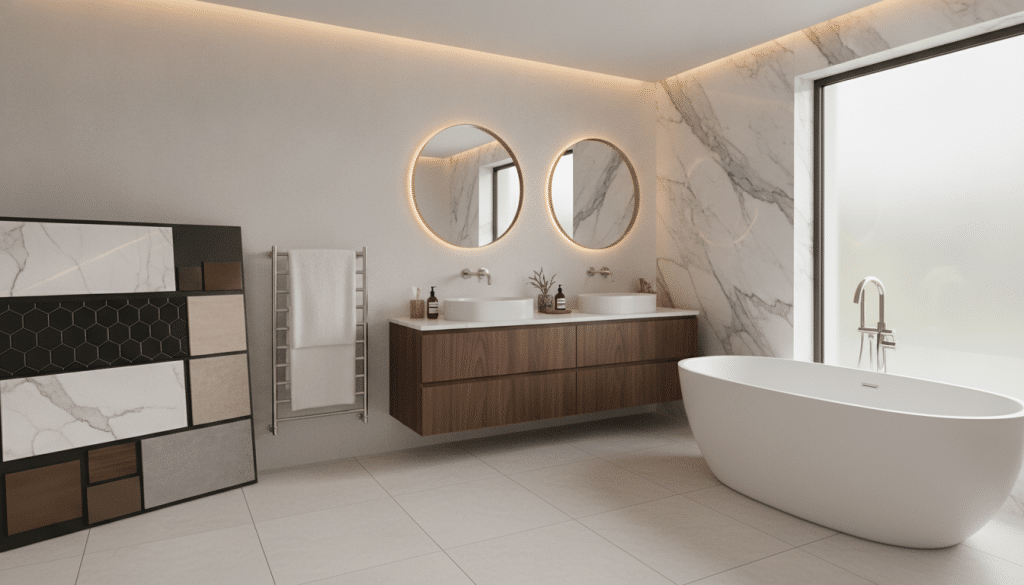
Tile can vary significantly in both material cost and installation requirements. Larger areas, complex patterns, specialty materials, niches, benches, borders, and extensive wall tile can all increase labor and material expenses.
The surface beneath the tile also matters. Proper preparation and waterproofing are particularly important around showers, tubs, and other wet areas. Covering an underlying moisture problem with new finishes can create a much more expensive repair later.
Slip resistance, moisture resistance, cleaning requirements, and long-term maintenance should be considered alongside appearance.
Showers, Bathtubs, and Sinks
Prefabricated showers and standard tubs generally cost less than custom shower systems or premium freestanding tubs. Glass enclosures, tile work, plumbing changes, niches, benches, and specialized fixtures can also increase the total project cost.
The shower is often one of the most construction-intensive areas of a bathroom because several trades and materials come together in one location. Plumbing, framing, waterproofing, tile, glass, and finish work all need to be coordinated correctly.
Lighting, Toilets, Vanities, and Storage
These items offer a wide range of choices. A standard vanity and lighting package may be relatively affordable, while custom cabinetry, premium countertops, specialty lighting, and high-end fixtures can quickly raise the overall budget.
Storage is worth planning early. A larger vanity, medicine cabinet, linen storage, recessed shelving, or other solutions can improve daily function without necessarily requiring major layout changes.
Virginia Beach Factors That Can Change Remodeling Prices
Local labor conditions, material availability, permit requirements, property age, and existing building conditions can all influence bathroom remodeling prices in Virginia Beach.
Two homeowners choosing similar finishes may still receive different estimates because one property requires more demolition, plumbing changes, access work, repairs, or permitting than the other.
Permits and Building Requirements
Some bathroom remodeling work may require permits or inspections, particularly when the project involves changes to plumbing, electrical systems, walls, ventilation, or other regulated building components.
The City of Virginia Beach provides permit information and plumbing permit documentation through its official trade permits resource. Homeowners planning significant plumbing or other regulated work can review the City of Virginia Beach Trade Permits page for current municipal information.
Permit requirements depend on the actual work being performed, so they should be reviewed as part of the project planning process rather than assumed in advance.
Moisture, Older Plumbing, and Hidden Repairs
One of the biggest uncertainties in a bathroom remodel is what may be discovered after demolition. Older bathrooms can contain deteriorated plumbing, damaged subfloors, moisture problems, inadequate ventilation, or previous repairs hidden behind walls and flooring.
A bathroom that looks reasonably sound from the surface may reveal damage once tile, cabinets, drywall, or fixtures are removed. These discoveries can affect both the schedule and the budget. That is one reason a contingency is important, particularly in older homes or bathrooms with a history of leaks.
- Review visible conditions before estimating.
- Keep a contingency for hidden conditions.
- Resolve moisture and plumbing problems before installing new finishes.
- Do not cover damaged substrates simply to keep the original schedule.
When a leak or moisture issue appears to originate inside the plumbing system, homeowners can also review Medrano & Sons’ leak detection and repair service to better understand how plumbing problems can affect surrounding walls, ceilings, and finishes.
Smart Ways to Save Money on a Bathroom Remodel
Reducing cost does not necessarily mean choosing the cheapest products. Good planning can protect the budget while still improving function, appearance, and durability.
Keep the Existing Plumbing Layout When Practical
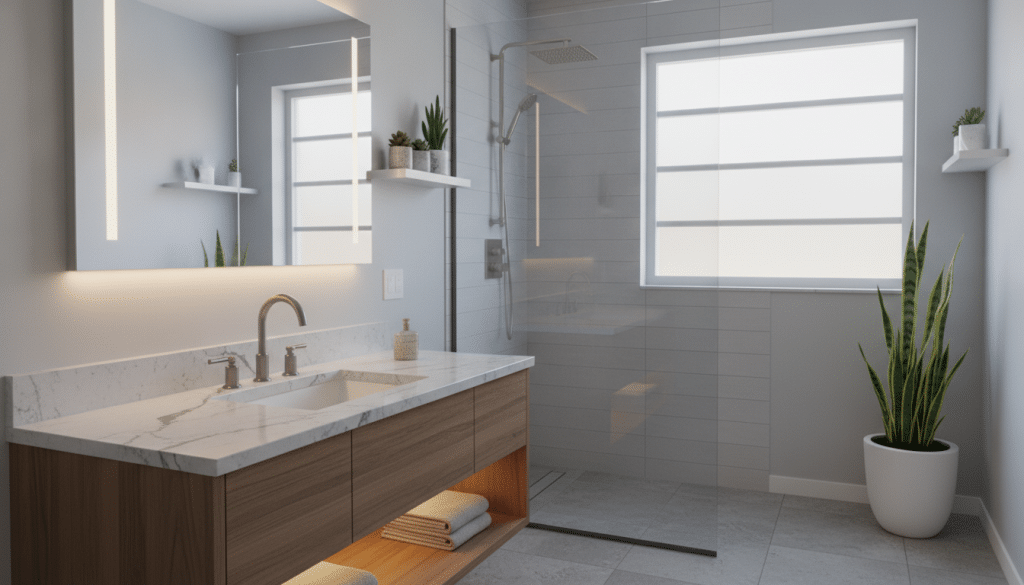
Moving a toilet, shower, bathtub, or sink can require additional plumbing work and may affect walls, floors, or adjacent spaces. Keeping fixtures close to their existing locations can help control the scope.
This does not mean you should preserve an inefficient layout simply to save money. If relocating a fixture makes the bathroom significantly more functional, the added cost may be worthwhile. The key is understanding the cost impact before construction begins.
Prioritize High-Impact Improvements
If the budget is limited, focus first on the features that affect daily use and the overall appearance of the bathroom. Lighting, vanity upgrades, fixtures, mirrors, flooring, and shower improvements can make a noticeable difference without changing every part of the room.
Separate needs from preferences. Fixing damaged plumbing, poor ventilation, water intrusion, or an unsafe surface should generally come before decorative upgrades that can easily be changed later.
Reuse What Still Works
Not every component has to be replaced simply because the room is being remodeled. If an existing fixture, door, layout feature, or portion of the construction is in good condition and works with the new design, keeping it can reduce both material and labor costs.
Selective remodeling can be particularly effective when homeowners want a meaningful improvement without turning the project into a full gut renovation.
Make Product Decisions Before Construction Starts
Late selections can lead to delays, substitutions, or redesign. Choosing major items such as the vanity, shower fixtures, tub, tile, toilet, lighting, and glass before the relevant phase of construction makes it easier to confirm dimensions and plan installation.
This is particularly important when products have longer lead times. A contractor can schedule work more effectively when the materials required for the next stage are available when needed.
Maintain a Contingency
Setting aside approximately 10% of the project budget for unexpected conditions can help prevent hidden plumbing, moisture, or structural repairs from disrupting the entire plan.
- Compare durable materials before ordering.
- Avoid unnecessary plumbing relocation.
- Choose priorities before construction begins.
- Keep contingency funds available for hidden conditions.
How to Plan and Price Your Bathroom Remodeling Project
The most useful bathroom remodeling budget begins with the project scope rather than a single price-per-square-foot figure. Decide what must change, what can remain, and which upgrades matter most to you.
If the bathroom project is part of a broader home improvement plan, it can also help to consider how the work connects with Medrano & Sons’ remodeling services. Planning connected projects together can make sequencing and material decisions easier when work extends
beyond the bathroom itself.
Set a Realistic Budget
Start with the type of remodel you want and then account for fixtures, materials, labor, plumbing, electrical work, demolition, finish work, and potential hidden conditions.
Avoid setting the entire budget equal to the estimated construction price. Maintaining additional flexibility gives you more room to respond if demolition reveals conditions that could not be seen before work began.
Separate Must-Haves From Nice-to-Haves
Before selecting products, create two lists. The first should contain problems that the project must solve, such as inadequate storage, a damaged shower, failing plumbing, poor ventilation, or an inefficient layout. The second can contain upgrades you would like if the budget allows them.
This makes it easier to adjust the project without sacrificing its primary purpose if estimates come in higher than expected.
Compare Detailed Contractor Estimates
Do not compare proposals based only on the bottom-line price. Review what each estimate includes, which materials are allowed for, the expected scope of work, disposal, cleanup, payment terms, and how changes to the original project will be handled.
A detailed estimate also makes it easier to identify differences between contractors. One proposal may include work that another has excluded, so the lowest number is not necessarily an equivalent scope.
Plan Specialized Work Before Finishes Are Installed
Plumbing, electrical, waterproofing, ventilation, and other work behind walls or under finishes should be coordinated before tile, drywall, cabinetry, and final surfaces are completed. Good sequencing helps reduce unnecessary rework.
If walls need to be opened or reconstructed as part of the renovation, Medrano & Sons’ drywall installation page provides additional information about that part of the construction process.
How Long Does a Bathroom Remodel Take?
Cost is not the only factor homeowners should plan for. The length of a bathroom remodel depends on the scope, product availability, inspections when applicable, subcontractor sequencing, and conditions discovered after demolition.
A limited cosmetic update may take only several days, while a more complete remodel can require several weeks. Projects involving structural work, plumbing relocation, custom materials, or significant hidden repairs can take longer.
Demolition and Preparation
The first stage typically involves removing the materials and fixtures included in the approved scope. This is also the stage where hidden conditions become visible. Damaged framing, plumbing issues, weak subflooring, or moisture damage can change the original plan.
Rough Plumbing, Electrical, and Framing
Once the room is open, work inside walls and floors can be completed before surfaces are closed. Changes at this stage need to be coordinated because later work depends on the placement of plumbing, electrical components, blocking, walls, and fixtures.
Waterproofing, Walls, Tile, and Finishes
After concealed work is complete, the project moves toward waterproofing, wall systems, tile, flooring, cabinetry, paint, fixture installation, and final details. These stages can be visually dramatic, but they rely on the earlier construction being completed correctly.
Painting and final wall finishes can also be coordinated with Medrano & Sons’ painting services when that work forms part of the approved remodeling scope.
Questions to Ask Before Approving a Bathroom Remodel
A little preparation before construction can help reduce misunderstandings later. Homeowners should understand both what is included and what is not included in the proposed scope.
- Which existing fixtures and surfaces are being removed?
- Will the current plumbing locations remain in place?
- Which materials are included in the estimate?
- Are allowances being used for fixtures, tile, cabinetry, or glass?
- How will unforeseen conditions be handled?
- Who is responsible for ordering major products?
- Does the project involve work that may require permits or inspections?
- What areas of the home need to remain accessible during construction?
- How will project changes be documented?
These questions are useful because bathroom remodeling combines design decisions with technical construction. The clearer the scope is before demolition begins, the easier it is to understand what the budget is intended to cover.
Why Work With Medrano & Sons Construction?
Medrano & Sons Construction is a family-owned company serving Virginia Beach and surrounding communities since 2017. The company works on residential and commercial construction, remodeling, plumbing, roofing, and related property improvement projects.
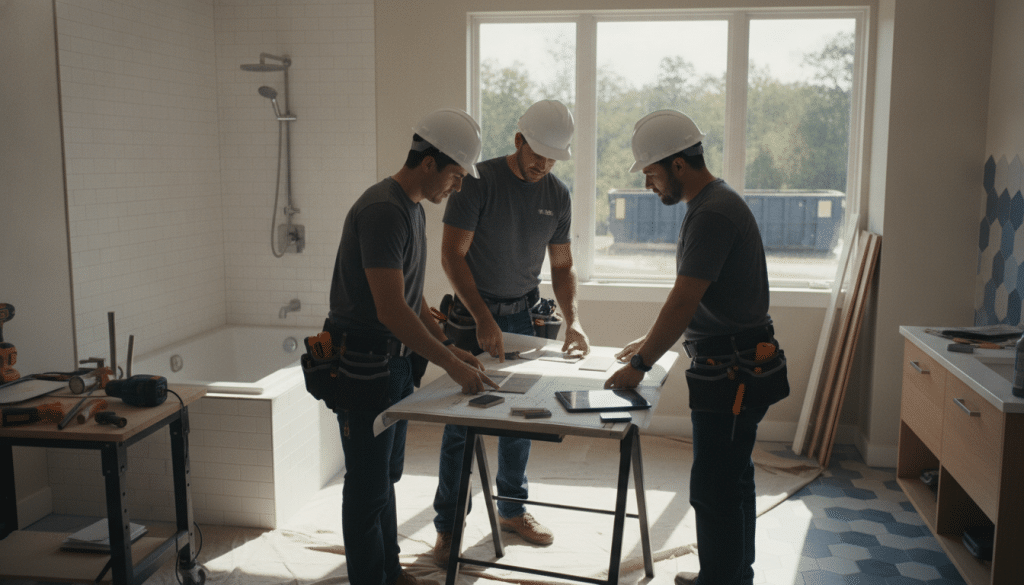
A bathroom remodel can involve several parts of the building at once. Having the project scope planned before work begins helps coordinate plumbing, demolition, walls, finishes, fixtures, and other related construction more effectively.
The goal is not simply to install new materials. A successful bathroom renovation should create a room that works better for the people using it while addressing the underlying construction required to support those improvements.
To discuss a bathroom remodeling project in Virginia Beach, call (866) 900-1462 or email sales@mscva.com.
Conclusion
Bathroom remodel costs in Virginia Beach depend on far more than room size alone. Plumbing, labor, materials, fixtures, tile, electrical work, layout changes, demolition, permits, access, and hidden conditions can all influence the final price.
Smaller projects may remain below $10,000, while larger renovations with extensive changes can reach $20,000 to $30,000 or more. Highly customized bathrooms or projects involving significant repairs can move beyond those general planning ranges.
Keeping the existing plumbing layout, selecting products early, prioritizing durable improvements, and maintaining a contingency can all help homeowners manage costs more effectively.
The best way to establish an accurate budget is to define the actual scope of your bathroom before making major product or design decisions. A thoughtful plan makes it easier to compare estimates, understand tradeoffs, and decide where spending will have the greatest impact.
Ready to discuss your project? Call (866) 900-1462 or email sales@mscva.com to speak with Medrano & Sons Construction.